Canada's Rocky Mountain national parks operate on ecological calendars that bear little resemblance to the tourism calendar. The months that see the most human visitors — July and August — are not necessarily the months that offer the most dramatic wildlife activity. Understanding when different species are most visible, most active, and most tolerant of observer presence requires looking at the specific behavioural triggers that operate through the year: food availability, mating cycles, territorial behaviour, and altitude preferences.
This guide focuses on the species most regularly encountered in Banff and Jasper, with notes on Pacific Rim where seasonal patterns differ substantially from the mountain parks.
Spring: April to Early June
Bear emergence from den sites is the defining event of the spring season in both parks. Grizzlies typically leave their winter dens between late March and early May, depending on elevation — higher-elevation dens can hold bears into late May in cold years. The first weeks after emergence are characterised by intensive foraging: bears move through south-facing avalanche slopes and valley bottoms where winter-killed ungulates, early grasses, and ground squirrel colonies concentrate food sources.
This foraging activity makes spring one of the more productive periods for bear observation from the Icefields Parkway. Bears working open avalanche slopes are visible at long distances during morning and evening light, which aligns well with the side-lighting conditions that produce the most detail in brown fur.

Grizzly bears are most visible on open avalanche slopes in spring when food concentrations draw them to predictable locations.
Elk calving begins in late May and continues into June. Cow elk move away from larger groups to calve in dense cover, which makes them less visible but more likely to respond defensively if approached too closely. This is one of the periods when maintaining significant distance from elk — well beyond the minimum legal approach distance — is most important. An elk cow that perceives a photographer as a predator risk can move her calf or, in some cases, react aggressively.
Spring Raptors
Golden eagles pass through the mountain corridors in April and May during their northward migration. The Palliser Range and other exposed ridgelines in Banff channel migrating raptors in ways that concentrate sightings over specific slopes. Bald eagles are present year-round in the Jasper area near the Athabasca River, where open water persists through colder months and provides reliable fishing access.
Summer: Late June to August
Summer in the mountain parks is characterised by animals dispersing to higher elevations as temperatures increase and insect pressure intensifies. Bears move up to berry patches and alpine meadows; mountain goats and bighorn sheep use high-elevation terrain where visibility and wind provide relief from insects and heat.
Photography in summer often means travelling to higher elevations rather than driving valley-bottom roads. The Columbia Icefield area, the Wilcox Pass trail in Jasper, and the Lake Agnes area above Lake Louise in Banff all provide access to subalpine and alpine terrain where bighorn sheep, pika, hoary marmots, and white-tailed ptarmigan are reliably encountered.
Summer Light Conditions
Summer days in the Rockies are long, but the quality of light for photography concentrates in the first 90 minutes after sunrise and the final 90 minutes before sunset. Midday light in open alpine terrain is harsh and low-contrast. Planning field time around these windows is more productive than hiking for maximum hours in midday conditions.
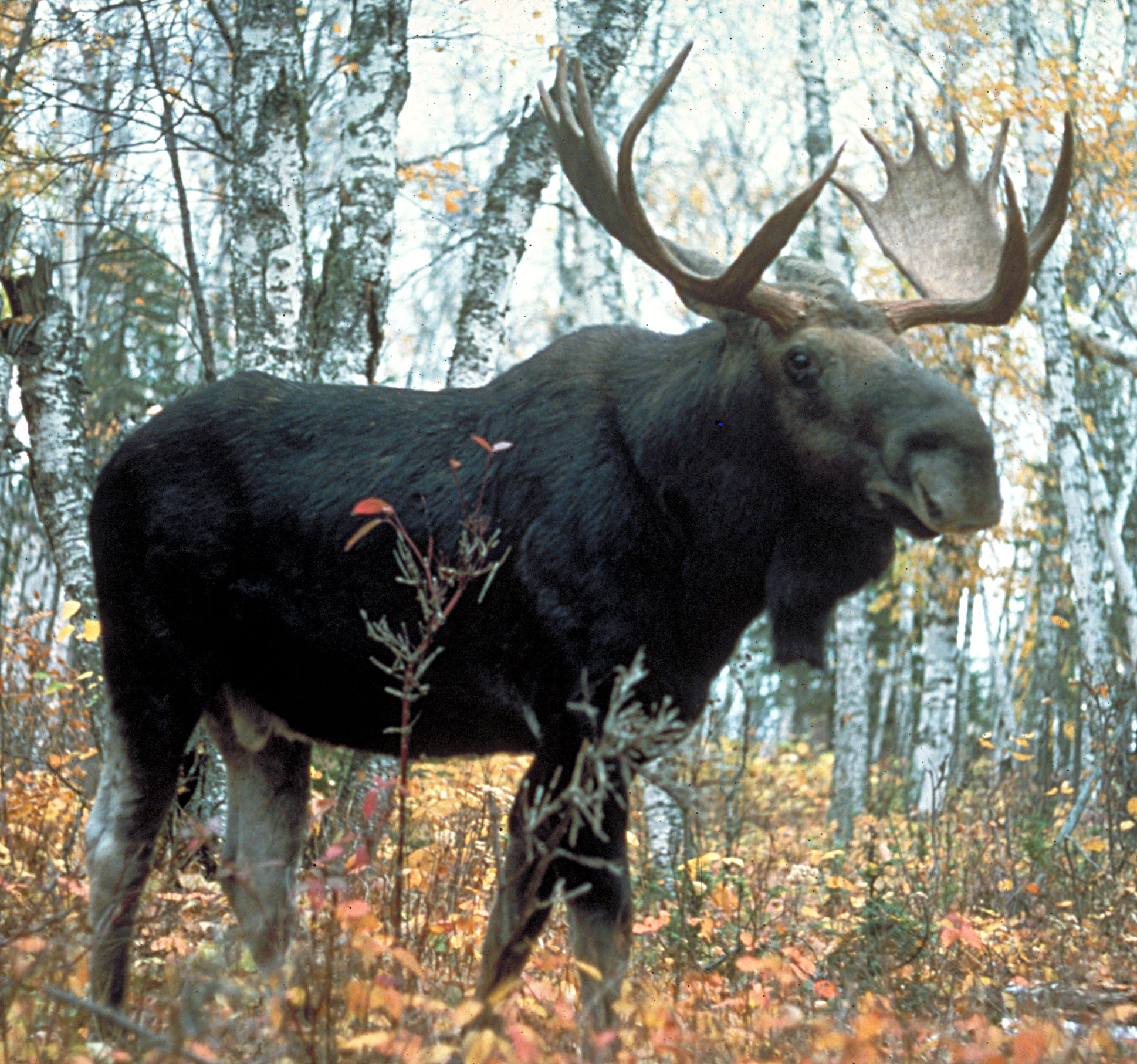
Moose are most reliably found in willow-lined waterways and wetland margins. In Jasper, the Athabasca Valley wetlands are a consistent location through summer and fall.
Moose in Summer
Moose are tied to wetland habitats through summer, feeding on aquatic vegetation in lakes and slow river sections. In Jasper, the wetlands along Highway 16 between the park gate and the townsite hold moose through the summer months. Shooting positions near water require awareness of the sun angle — front-lit moose in dark water produce flat results, while a side or back-lit position with a reflective water surface can produce dramatically different images.
Autumn: September to Early November
The elk rut runs through September and into October, and it is the most reliably spectacular wildlife event in the Rocky Mountain parks. Bull elk, which spend most of the year in bachelor groups away from cows, move into the valleys and meadows where cow groups concentrate. Bugling — the resonant call that bulls use to advertise presence and challenge rivals — is audible at long distances in still morning air and defines the sound environment of the parks through September.
The Vermilion Lakes area outside Banff townsite holds elk through the rut and offers open sightlines with the Rockies as backdrop. The Athabasca River corridor near Jasper townsite serves a similar function. Bulls during the rut are predictable in their territorial movements, which makes positioning easier — but they are also significantly more reactive to perceived challenges. Maintaining distance and avoiding behaviour that a bull might interpret as a rival display (sustained eye contact, slow walking toward the animal, sudden noise) is important throughout the rut period.
Bears in Fall
Late August through October is the period of hyperphagia — the intensive caloric loading that precedes winter denning. Grizzlies feeding on berry crops in subalpine terrain become more tolerant of observation pressure but also more focused and less predictable in their movements. Black bears forage lower in the valley, often in roadside habitats where human food attractants create habituation problems. Habituated animals in road corridors are consistently documented in Parks Canada management reports and represent a conservation concern distinct from wilderness encounters.
Winter: December to March
Winter photography in the mountain parks is operationally demanding but offers distinct conditions unavailable in other seasons. Wolves, which cover large territories and are rarely encountered in summer, become more visible in winter as prey animals concentrate on south-facing slopes and valley bottoms with less deep snow. Wolf tracks, scat, and occasionally the wolves themselves appear in valley terrain more regularly than in any other season.

Snow-covered terrain in the mountain parks compresses animal movement into valley corridors, increasing encounter probability with wolves and other species.
Elk remain in the valley bottom through winter, moving through the same corridors they use in fall but in larger, more cohesive groups. The Bow Valley in Banff and the Athabasca Valley in Jasper are the most productive winter locations for elk observation. Gray jays, Clark's nutcrackers, and black-billed magpies are active through winter and offer photographic opportunities that don't require long lenses — these species are frequently approachable in the park townsites.
Pacific Rim: A Different Seasonal Calendar
Pacific Rim National Park Reserve on Vancouver Island operates on a coastal temperate calendar with no true winter in the Rocky Mountain sense. Black bears are active through much of the year, concentrating on intertidal zones for invertebrate foraging in spring and salmon streams in fall. Grey whale migration passes through Clayoquot Sound in late March and April, with smaller numbers of individuals resident in coastal waters through summer. Bald eagles nest along the shoreline and are present year-round in numbers that make Pacific Rim one of the more consistently productive parks for raptor photography without long-distance travel.
Last updated: June 12, 2026. Species behaviour information based on publicly available Parks Canada ecological data and management documents.