Canada's national parks operate under federal legislation that protects wildlife from disturbance, harassment, and feeding. The Canada National Parks Act and its associated regulations establish the legal framework; Parks Canada warden staff enforce it. For photographers, understanding these regulations is not merely a matter of compliance — it affects access. A grizzly bear that becomes conditioned to human presence near roads is typically removed from those areas or, in worst cases, destroyed. An elk that learns to associate humans with tolerance is more likely to become dangerously aggressive during the rut. The consequences of poor field conduct fall on the wildlife, not just on the individual photographer.
Minimum Approach Distances
Parks Canada publishes minimum approach distances that vary by species and by park. These are not advisory — they are legal requirements. In Banff and Jasper, the current requirements for the species most frequently photographed include a minimum of 100 metres from all bears (both grizzly and black) and all wolves, and a minimum of 30 metres from all other wildlife including elk, deer, and coyotes. These distances apply regardless of whether the animal appears calm or undisturbed.
The practical implication for photographers is clear: reaching a required minimum distance of 100 metres from a bear while achieving a frame-filling composition requires a telephoto lens of at least 400mm on a full-frame body, and more practically 500–600mm for compositions where the bear occupies more than a quarter of the frame. This is not a coincidence — the regulations were set partly with the understanding that photographers with appropriate equipment can work at these distances without needing to close the gap.
| Species | Minimum Distance (Banff/Jasper) | Notes |
|---|---|---|
| Grizzly bear | 100 m | Applies year-round including den vicinity |
| Black bear | 100 m | Same as grizzly; both are protected species |
| Wolf | 100 m | Pack encounters require wider buffers in practice |
| Elk, moose, bison | 30 m | Increase during rut and calving season |
| All other wildlife | 30 m | Including deer, coyotes, raptors |
These figures are specific to Banff and Jasper as of the date of this article. Other parks may differ — Pacific Rim National Park Reserve, for instance, has specific regulations around marine mammal observation distances that are not applicable in the mountain parks. Verifying current regulations at each park before a visit is necessary, as they are periodically updated. The authoritative source is the Parks Canada wildlife page.
The Habituation Problem
Habituation occurs when a wild animal progressively reduces its avoidance response to human presence through repeated exposure without negative consequence. A bear that tolerates a photographer at 50 metres without fleeing is not a "tame" bear — it has simply learned that humans at that distance pose no immediate threat. The problem develops when that same bear's reduced wariness extends to other contexts: roadside stops, hiking trail encounters, campsite proximity.
Roadside wildlife jams — the clusters of stopped vehicles and pedestrians that form whenever a large mammal is visible from Highway 1 or the Icefields Parkway — are a significant vector for habituation. The aggregate effect of many separate low-stress encounters, each individually within regulations, can condition animals to treat high-traffic corridors as safe zones. Parks Canada warden staff actively manage high-profile habituated animals, sometimes redirecting them away from road corridors using hazing techniques. The outcomes are not always successful.

Protected area signage in Alberta. Regulations governing approach distances and prohibited activities apply throughout designated wildlife areas and national park boundaries.
Behavioural Indicators of Stress
An animal that has not been habituated to human presence will typically display stress responses before a photographer reaches the legal minimum approach distance. These include: orienting the head toward the observer and stopping movement, flicking the ears rapidly, shifting weight between feet, moving toward cover, or in the case of bears, bluff-charging or jaw-popping. Any of these responses indicates the animal is aware of the observer and is processing the encounter as a potential threat.
The appropriate response to any visible stress indicator is to increase distance and reduce the observer's prominence — crouch lower, move laterally rather than directly away, avoid eye contact, and wait. Continuing to approach, or holding position while an animal displays stress, constitutes harassment under the Canada National Parks Act regardless of whether the minimum distance is technically maintained.
Baiting and Attractants
Baiting wildlife to a specific location — using food, scent lures, animal calls, or recorded distress calls to attract an animal for photography — is prohibited in all national parks and in most provincial parks across Canada. The prohibition extends to passive attractants: leaving food waste, fish cleaning residue, or scented equipment in areas where wildlife might encounter it.
Audio playback of bird calls to attract species for photography occupies an area of ongoing discussion. While not explicitly addressed in the same terms as food baiting in most parks' regulations, the use of recorded calls to draw birds to an unnatural location — particularly during breeding season — causes measurable disruption to territorial and nesting behaviour. Several photography associations, including the North American Nature Photography Association (NANPA), have published guidelines recommending against call playback during nesting season for this reason.
Bear Spray as Standard Equipment
Bear spray — EPA-registered capsaicin deterrent — is considered standard safety equipment for backcountry travel in Banff, Jasper, and all mountain parks where grizzlies are present. It is not a substitute for appropriate field conduct, but it is a meaningful risk-reduction measure. Parks Canada staff and park wardens routinely carry it. Information on correct use is available from the park visitor centres.
Leave No Trace in Photographic Practice
The Leave No Trace (LNT) framework — a set of outdoor conduct principles that originated in the United States but is recognised by Parks Canada and other Canadian public land managers — translates directly to photographic field practice. The relevant principles for wildlife photographers include travelling on durable surfaces, minimising campsite impact when backcountry photography is the objective, and properly managing waste.
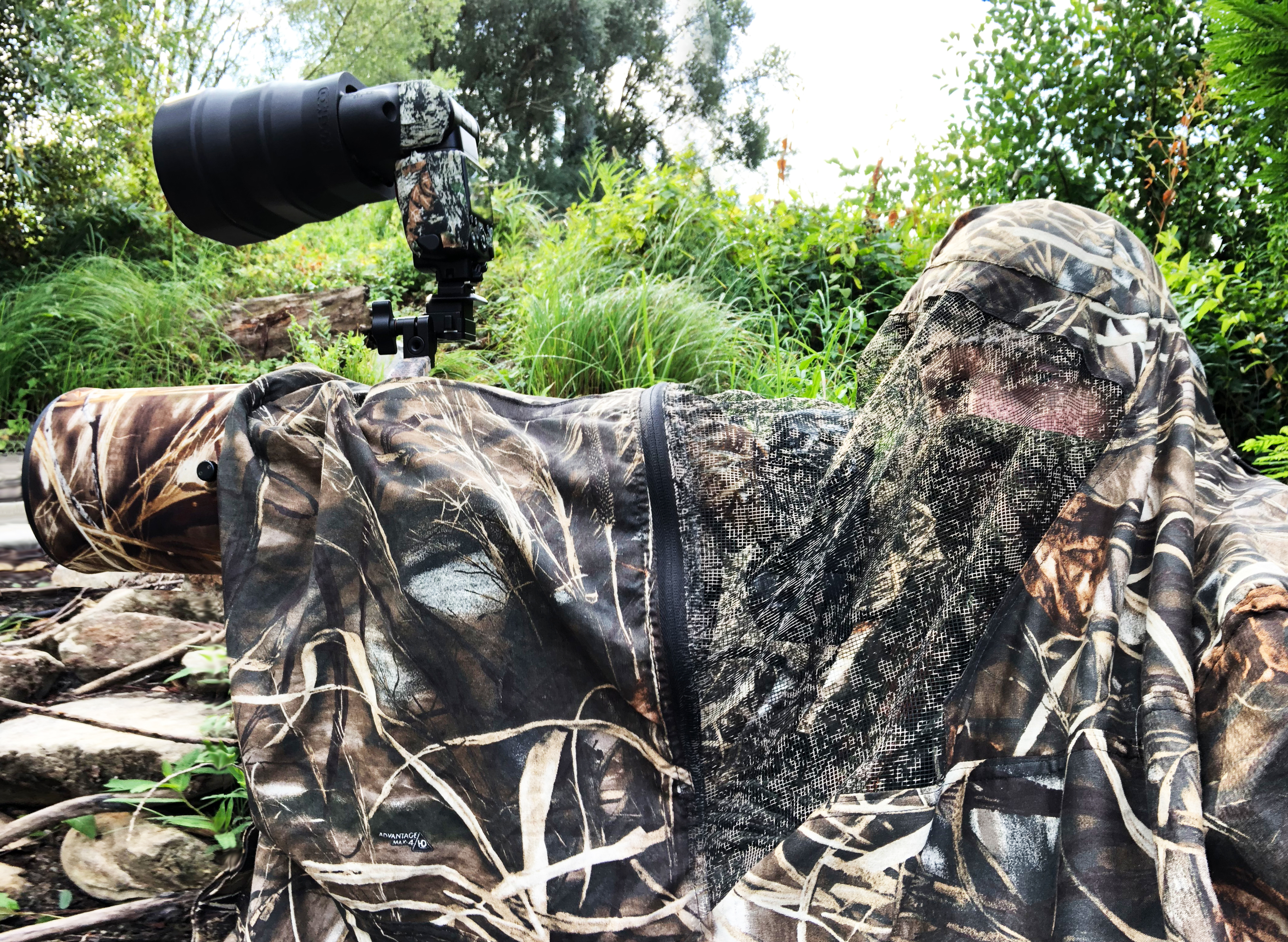
One specific application is the use of hides or blinds. A permanent or semi-permanent hide built from cut vegetation, disturbed soil, or materials brought into the park is not consistent with LNT practice and is unlikely to be permitted in national parks without specific warden authorization. Portable commercial hides — folding tent-style structures that can be carried in and out without leaving trace — are generally acceptable if positioned to minimise impact on the site.
Photography During Sensitive Periods
The periods that produce the most dramatic photographic opportunities are often the same periods when wildlife are most vulnerable to disturbance. Bear dens are active from November through April; approaching a den site or operating in terrain where den activity is suspected is prohibited and genuinely dangerous. Elk calving areas in late May and June are subject to increased warden monitoring. Nesting raptor territories are sometimes cordoned off during active nesting in spring.
Parks Canada routinely publishes area closures on its park websites and through the Park Advisor app. Checking for active closures before entering any backcountry terrain is standard practice, and not only for regulatory compliance — closures are sometimes posted because of active predator-prey interactions or large mammal concentrations that make an area operationally hazardous.

Juvenile bald eagle in Alberta. Active raptor nest sites are sometimes subject to seasonal access restrictions in national parks during breeding periods.
Sharing Locations Responsibly
The practice of sharing precise GPS coordinates for wildlife encounters on public social media platforms has become a documented concern in park management. When a specific denning location, calving meadow, or nest site becomes widely known and attracts sustained visitor pressure, the disturbance effects accumulate across many individual interactions. Several Canadian birding and nature photography communities have adopted informal norms around location sharing — using vague regional references rather than GPS pins for sensitive species or locations, particularly during breeding and denning seasons.
This is not a legal requirement but a field ethics consideration that aligns with the broader goal of maintaining healthy wildlife populations in areas that are simultaneously significant to photographers and to functioning park ecosystems.
Last updated: June 12, 2026. Regulatory information is based on publicly available Parks Canada documentation. Regulations are subject to change; verify current requirements before each park visit.