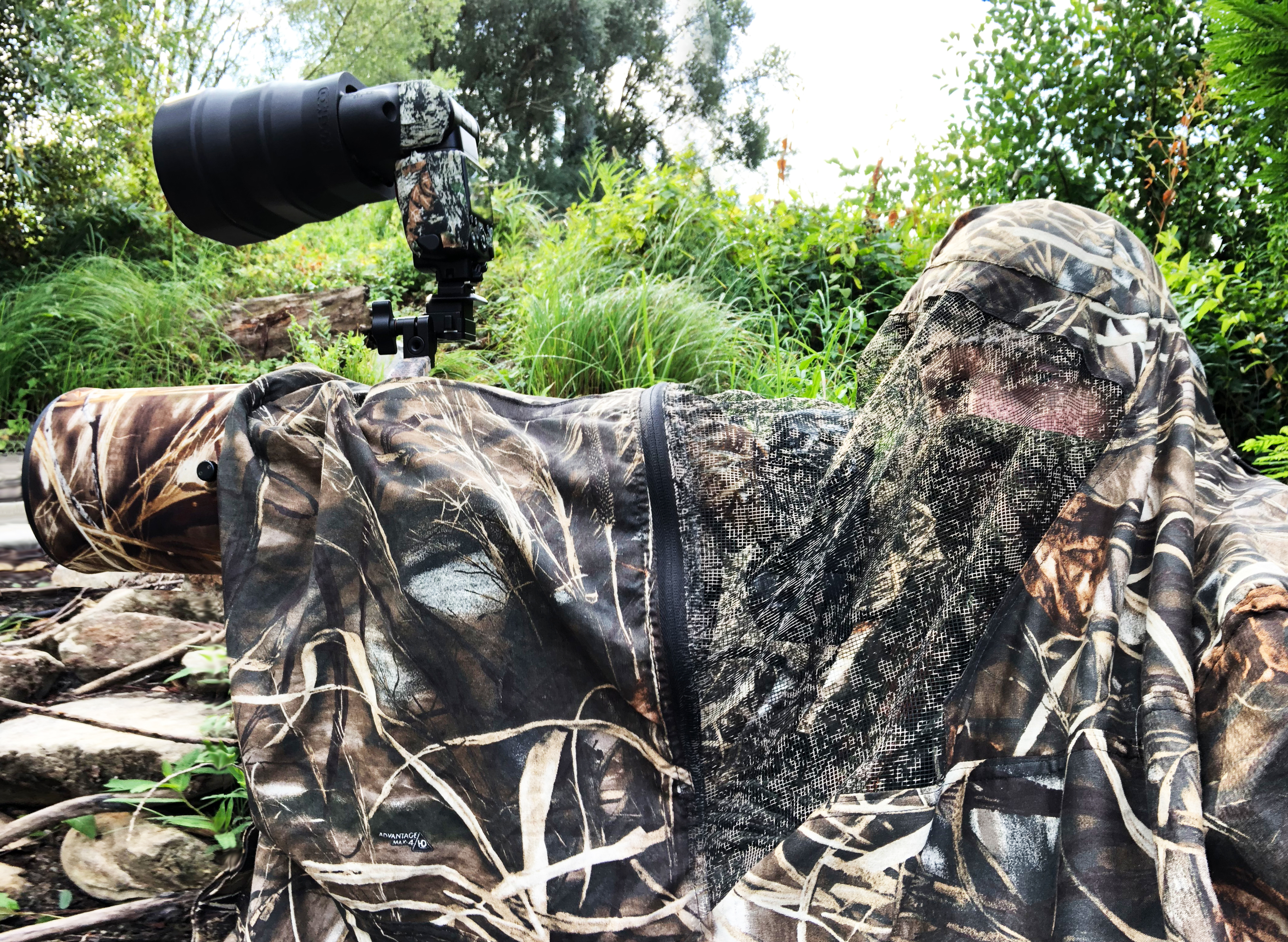
In most of Canada's national parks, the distance between a photographer and the nearest large mammal is rarely a choice — it's imposed by terrain, regulation, or the animal's own threshold for human presence. Grizzly bears in Banff are legally required to be photographed from at least 100 metres; a bison herd in Riding Mountain may simply refuse to cooperate at anything less. A lens that can produce a sharp, frame-filling image at that kind of distance defines the practical boundary of what's possible in the field.
The decision about focal length sits at the centre of most equipment choices, but it's not the only consideration. Autofocus performance, lens weight, and weather sealing all affect how a lens behaves once you're standing on the Icefields Parkway at 5 a.m. in early October.
Focal Length and Working Distance
The most common focal range for Canadian wildlife photography falls between 400mm and 600mm on a full-frame sensor body. At 400mm, an elk filling the middle third of the frame needs to be roughly 40–60 metres away — achievable in many open meadow situations. At 600mm, the same composition can be achieved at 80–100 metres, which keeps you comfortably outside the legally required approach distance for larger ungulates and bears.
| Focal Length | Typical Working Distance (subject at 1/4 frame) | Common Use Case in Canadian Parks |
|---|---|---|
| 300mm | 30–50m | Waterfowl on calm lakes, perched raptors |
| 400mm | 50–80m | Elk and deer in open meadows, roadside bears |
| 500mm | 70–100m | Mountain goats on distant ledges, wolves |
| 600mm | 90–130m | Grizzlies at required approach distances, distant raptors |
These figures assume a full-frame sensor. Photographers using crop-sensor cameras gain an effective 1.5× or 1.6× multiplier — a 400mm lens becomes roughly equivalent to 600mm on an APS-C body. This can be a practical advantage for budget-constrained kits, though the smaller sensor area affects light-gathering performance in low-contrast dawn and dusk light.
Prime vs. Zoom: What Changes in the Field
The traditional argument for telephoto primes — sharper wide open, smaller maximum aperture, faster autofocus — holds up in most conditions. A 500mm f/4 prime is lighter than a 200–600mm zoom covering the same range, delivers better optical performance at its maximum aperture, and tends to track erratic movement more reliably in burst sequences.
The case for a telephoto zoom has become more defensible in recent years. Lenses in the 100–500mm and 200–600mm range from major manufacturers now deliver image quality that, at typical print and screen sizes, is difficult to distinguish from equivalent primes when shooting at f/8 or f/11 in adequate light. The practical advantage is compositional flexibility: when a black bear emerges from the tree line at 30 metres instead of the anticipated 80, the ability to pull back from 500mm to 300mm without changing position is operationally significant.
Note on Super-Telephoto Primes
Super-telephoto primes of 600mm and above are primarily relevant to photographers working from fixed positions — hides, vehicles, or established roadside pull-offs where tripod use is practical. Their weight makes them poorly suited to foot-travel on backcountry trails in parks like Yoho or Kluane, where carrying capacity is already constrained by other gear.
Autofocus for Moving Subjects
Most large mammals in national parks are not running. Elk grazing in a meadow, a bear turning over rocks beside a creek, or a great grey owl scanning from a fence post all move slowly enough that even basic autofocus systems can track them adequately. The more demanding scenario is a ptarmigan flushing from cover, a marten moving through deadfall, or a wolf trotting at medium speed across an open slope.
Cameras that use phase-detect autofocus embedded across the sensor — increasingly standard in mirrorless systems — handle moving subjects significantly better than older contrast-detection designs. If the camera body is recent and capable, the autofocus performance of a telephoto lens is determined partly by its internal motor and partly by how the camera and lens communicate during burst shooting.
For photographers buying a new telephoto lens, checking whether the lens is on the manufacturer's compatibility list for the specific camera body's subject-tracking modes is a practical step before purchase. Subject-tracking performance can vary substantially between lens generations even from the same manufacturer.

A juvenile bald eagle in Alberta. Raptors perched on open branches are achievable with a 400mm lens; birds in flight require consistent autofocus tracking performance.
Weather Sealing in Canadian Conditions
Mountain weather in the Canadian Rockies changes quickly. A clear morning in Jasper can become a rain or snow event within an hour, and early-season photography often involves operating at temperatures that push camera batteries toward their lower performance thresholds. Weather sealing — moisture resistance built into lens barrel joints and switches — reduces the risk of moisture ingress during these transitions.
All major telephoto lenses at the professional tier include weather sealing; most mid-range zooms in the 100–500mm category now do as well. It is worth confirming the sealing specification before purchasing, as some lower-cost telephoto options omit it in the interest of price reduction.
Teleconverters and Their Limitations
A 1.4× teleconverter on a 400mm f/2.8 produces 560mm at f/4 — retaining autofocus capability on most bodies. A 2× converter on the same lens gives 800mm at f/5.6, which is where autofocus reliability begins to degrade noticeably in low light. Teleconverters are most practical when the base lens is already optically strong: the converter magnifies aberrations in addition to focal length.
On a 100–500mm zoom, a 1.4× converter produces a 140–700mm range at a reduced maximum aperture — a setup that covers almost every working distance scenario in open parkland. The trade-off is weight and the additional coupling interface, which can introduce subtle misalignment over time if the converter isn't stored carefully.
Weight as a Field Constraint
Banff and Jasper have extensive trail networks where wildlife encounters occur far from roads. A 600mm f/4 prime can weigh over 3 kg without a tripod collar — before the camera body, tripod, and day-pack essentials are factored in. This weight is rarely sustainable over multi-hour hikes at elevation, particularly on trails with significant vertical gain.
For photographers who want to cover backcountry terrain without a vehicle-based kit, the practical ceiling tends to sit around a 100–500mm or 150–600mm zoom with a camera body, at a combined weight of roughly 2–2.5 kg. Beyond that threshold, the physical demands of carrying the kit begin to affect decision-making — which slopes to take, how long to wait at a location — in ways that reduce photographic opportunities.
Parks Canada Regulations Note
Equipment choices should be informed by the parks' access and approach regulations, not the other way around. Using a longer lens to get closer to an animal than regulations permit is not an appropriate use of telephoto reach. Current regulations for each park are available on the Parks Canada wildlife page.
Last updated: June 12, 2026

